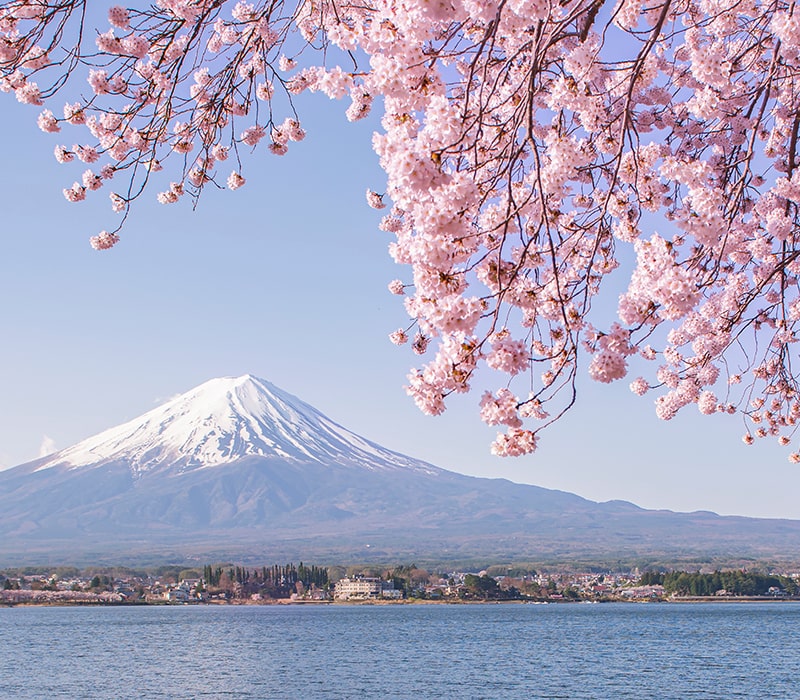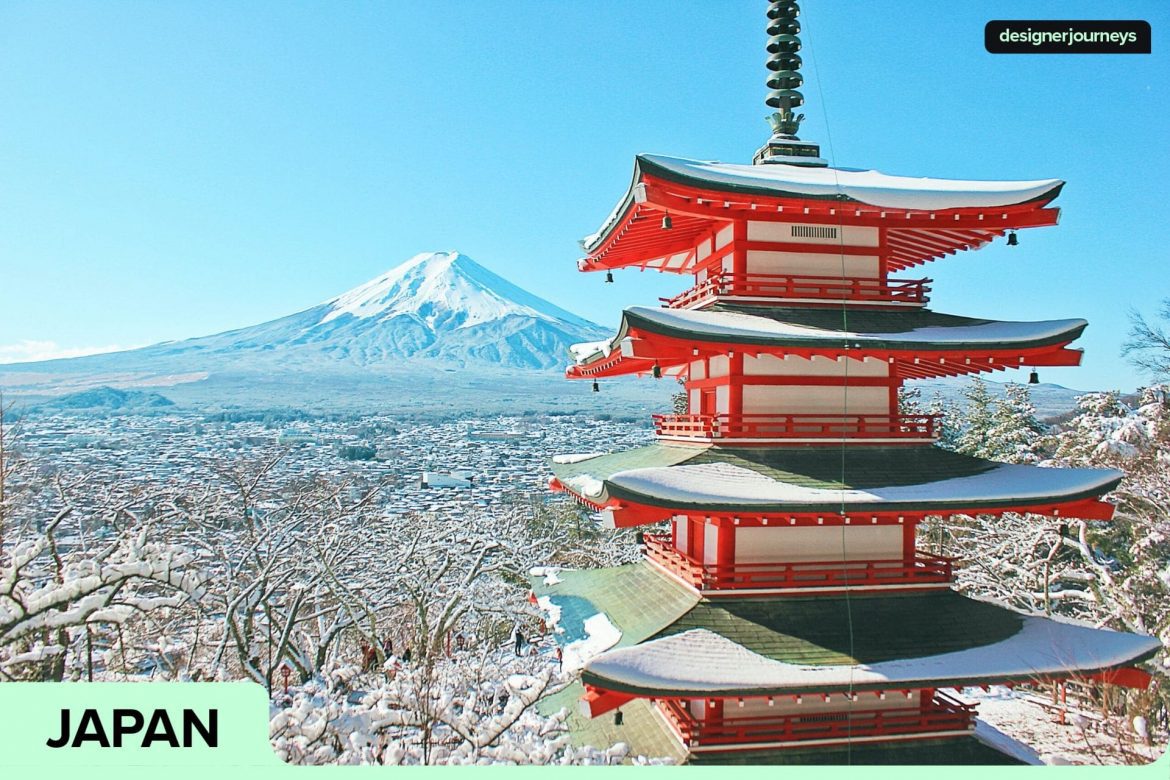
Japan in January is an excellent time to visit if you want powder snow, clear winter skies, steaming onsen and major sights with fewer visitors. The trade-off is real, though: the first few days of January in Japan bring closures and heavy domestic travel, daylight is short, and northern Japan is properly cold.
For most travellers, the sweet spot begins after the New Year holiday. From roughly the second week of January, Tokyo, Kyoto and Osaka settle back into their normal rhythm, while Hokkaido and the Japanese Alps move into some of their best snow conditions of the season.
January is also one of those months when choosing where you go matters more than usual. Tokyo may be crisp and sunny while Hokuriku is buried under snow. You can ski waist-deep powder in Hokkaido, soak in an outdoor rotenburo surrounded by snow in Nagano, or escape winter almost entirely in Okinawa.
This guide is about January specifically rather than Japanese winter in general, because the difference matters. A trip leaving on 30 December and a trip leaving on 15 January are close to two different holidays.
Post Contents
- Japan in January at a glance
- Japan weather in January, region by region
- The New Year period: what is actually closed?
- January festivals and events in Japan
- Best places to visit in Japan in January
- Onsen: January may be the best month for it
- What to eat in January
- A 10-day Japan in January itinerary
- Practical tips for travelling to Japan in January
- What January is not good for?
- Japan in January FAQs
- Is January the right month for your Japan trip?
Japan in January at a glance
There are really two versions of Japan in January: the New Year period and the rest of the month.
| 1 – 4 January | 5 – 31 January | |
|---|---|---|
| Crowds | Very busy at major shrines, transport hubs and popular New Year destinations | Generally low in major sightseeing cities; ski areas remain busy |
| Prices | Higher around New Year, especially for transport and resort accommodation | Often better value outside ski resorts and weekends |
| Weather | Cold nationwide; deep winter conditions in the north and mountains | Similar, with increasingly reliable snow in ski regions |
| Daylight | Roughly 9-10.5 hours depending on latitude | Slowly increasing through the month |
| Best for | Hatsumōde, Japanese New Year traditions, atmosphere | Skiing, onsen, quieter cities, winter food and sightseeing |
| Think twice if | You dislike closures, queues or having to book well ahead | You want warm weather, long hiking days or cherry blossoms |
I usually prefer a first or second trip in mid-to-late January. You still get Japan at its most wintry, but without having to build the whole itinerary around holiday closures.


Japan weather in January, region by region
January is one of Japan’s coldest months, but “cold” means very different things depending on where you are.
Japan Meteorological Agency climate normals for 1991-2020 put Tokyo’s average January high at 9.8°C (50°F) and low at 1.2°C (34°F). By comparison, Sapporo averages a high of -0.4°C (31°F) and a low of -6.4°C (20°F). Osaka is milder, while Naha in Okinawa feels almost like a different season altogether.
| City | Avg. January high | Avg. January low | What it usually feels like |
|---|---|---|---|
| Sapporo | -0.4°C / 31°F | -6.4°C / 20°F | Proper snow-and-ice winter; insulated boots matter |
| Tokyo | 9.8°C / 50°F | 1.2°C / 34°F | Cold, dry and often bright; colder after sunset |
| Kyoto | Around 9°C / 48°F | Around 1°C / 34°F | Chilly mornings and evenings; occasional snow |
| Osaka | 9.7°C / 49°F | 3.0°C / 37°F | Cold but manageable for full days outdoors |
| Hiroshima | 9.9°C / 50°F | 2.0°C / 36°F | Cool and relatively mild compared with mountain regions |
| Naha | 19.8°C / 68°F | 14.9°C / 59°F | Light-jacket weather rather than deep winter |
Source: Japan Meteorological Agency, 1991-2020 climate normals.
What the numbers don’t show particularly well is the difference between Japan’s two winter faces.
On the Pacific side, including Tokyo, winter can feel remarkably crisp. Humidity is low, skies are frequently clear and, in direct sunshine, a 9°C afternoon can feel much more comfortable than the number suggests. Once the sun disappears, however, temperatures drop quickly.
The Sea of Japan side and the mountains are another story. Moisture crossing from the continent produces heavy snow, which is exactly why areas such as Niseko, Hakuba and parts of Nagano are so attractive to skiers.
The practical lesson is simple: don’t pack for “Japan.” Pack for your route. A Tokyo-Kyoto-Osaka trip needs a good coat and layers. Add Hokkaido, Zao or the Japanese Alps, and you need waterproof footwear, gloves and clothing designed for persistent snow.
The New Year period: what is actually closed?
This is the part of visiting Japan in January that catches travellers out. 1 January 2027 is a national public holiday, and the broader Shōgatsu period affects businesses for several days around it.
There isn’t one nationwide rule saying everything closes from a particular date, but we treat 29 December to 3 January as the period to plan around most carefully. Museums, galleries and independent restaurants are the most likely to be shut.
29-31 December
This is when many smaller restaurants, family-run shops, museums and private businesses begin their holidays.
Transport still operates, but domestic travel is heavy. Reserved seats on popular Shinkansen services and flights can become difficult to secure.
If you’re arriving during this period, a large city is much easier to work with than a remote onsen town where only a handful of restaurants may be available.
1 January
New Year’s Day is a public holiday. Many museums, attractions and independent businesses remain closed, although temples and shrines are very much alive.

The atmosphere is generally one of joy, hope, and renewal.
This is hatsumōde, the year’s first shrine or temple visit, and major sites can be packed. Meiji Jingū in Tokyo and Fushimi Inari in Kyoto are atmospheric places to experience it, but this isn’t the morning to visit if peaceful photography is your priority.
2 – 3 January
The country gradually wakes up.
Major retailers begin their New Year sales, often with fukubukuro, or “lucky bags”, containing mystery selections of merchandise sold at a set price. Opening dates vary by store, so don’t assume every department store starts on 2 January.
Shrines remain busy, but restaurants, shops, and attractions are increasingly reopening.
From around 4-5 January
For travellers, this is when the trip becomes much easier. Most everyday services are moving back towards normal, although individual restaurants, small shops and family-run properties may take longer to reopen.
By the second week, Japan feels much more like a normal winter destination.
11 January 2027: Coming of Age Day
Coming of Age Day, or Seijin no Hi, falls on Monday, 11 January 2027.
There is one nuance worth understanding. Japan lowered its legal age of adulthood from 20 to 18 in April 2022, but many municipalities continue to hold their coming-of-age ceremonies for people around the age of 20.

It is a significant milestone marking the transition to adulthood.
You’ll often see young adults dressed in furisode kimono, hakama or formal Western clothing heading to ceremonies and taking photographs with friends and family.
Practical advice: if your dates are flexible, we would avoid making 30 December to 3 January the logistics-heavy part of a first Japan trip. Stay in Tokyo, Kyoto or Osaka, enjoy the New Year atmosphere, then move into rural Japan once normal services resume.
January festivals and events in Japan
January isn’t as festival-packed as summer, but several of its events make no sense at any other time of year.
| Event | 2027 timing | Location | Why go |
|---|---|---|---|
| Shōgatsu and hatsumōde | 1 – 3 January | Nationwide | Japan’s most important New Year traditions |
| Hatsuichi / daruma markets | Early January | Various locations | Lucky daruma dolls and New Year market atmosphere |
| Grand Sumo January Tournament | 10 – 24 January 2027 | Ryōgoku Kokugikan, Tokyo | One of Tokyo’s best January – only experiences |
| Coming of Age Day | 11 January 2027 | Nationwide | Formal ceremonies and traditional dress |
| Dondo Yaki | Around mid-January | Nationwide | New Year decorations burned in ceremonial bonfires |
| Zao snow monsters | January into winter | Yamagata | Trees encased in wind-driven ice and snow |
| Wakakusa Yamayaki | 23 January 2027, weather permitting | Nara | Mt Wakakusa’s hillside is set alight after dark |
| Yunishigawa Onsen Kamakura Festival | 29 January-28 February 2027 | Tochigi | Hundreds of small illuminated snow huts |
The event we would prioritise in Tokyo is the Grand Sumo January Tournament. The Japan Sumo Association has scheduled the 2027 tournament at Ryōgoku Kokugikan from 10 to 24 January. Tickets go on advance sale on 5 December 2026, so build this into the trip early rather than deciding once you land.
Another good reason to travel late in the month is the Yunishigawa Onsen Kamakura Festival. The 2027 event starts on 29 January, with miniature snow huts illuminated along the river on Friday, Saturday and Sunday evenings.
In Nara, Wakakusa Yamayaki is scheduled for 23 January 2027. The mountain burning is weather-dependent, so keep some flexibility if it is the main reason for your visit.
One event that isn’t in January is the Sapporo Snow Festival. It takes place in February. If the giant snow sculptures are the main image you have in mind when planning your trip, you need the Sapporo Snow Festival in February, not a January departure.
Best places to visit in Japan in January
Hokkaido and Niseko: for serious snow
For dependable powder snow, Japan’s northernmost island, Hokkaido, is the obvious answer. Cold air crossing the Sea of Japan drops snow on the island from December onwards, and the seafood, dairy and ramen are good enough to justify the flight on their own.
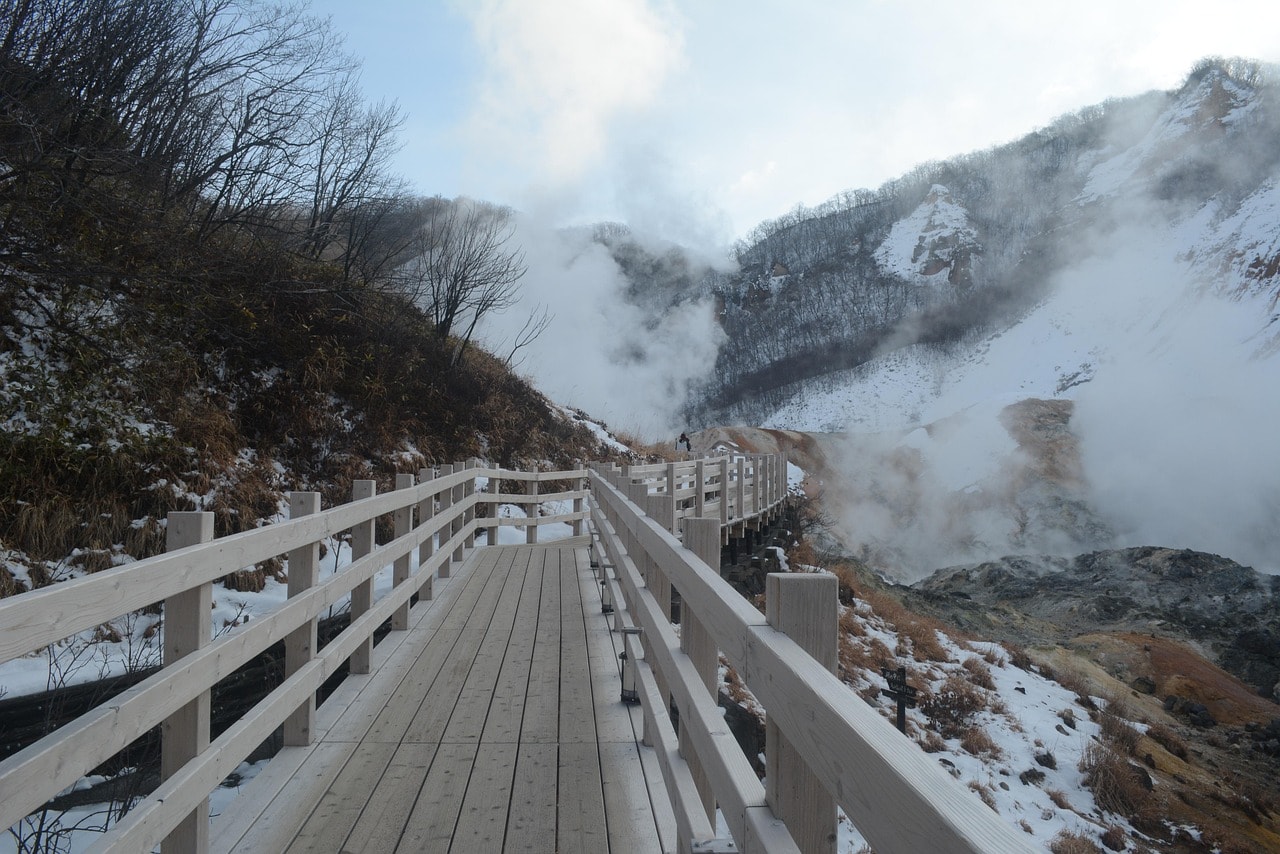
Hokkaido is home to several national parks that showcase its natural beauty.
Niseko is the international name everyone knows, and for good reason. January usually means deep snow, a well-developed ski infrastructure and plenty of onsen for the end of the day.

The area is also known for its agriculture, producing high-quality dairy products and vegetables.
The downside is that Niseko is not Japan’s quiet January bargain. Ski accommodation can be expensive, and good properties book early.
Sapporo works well if you want winter without committing the whole trip to skiing. You can eat exceptionally well, take day trips into the snow and ski at nearby resorts.

The city features a mix of modern buildings and older structures.
Just remember that January is before the Sapporo Snow Festival.
Zao and the Japanese Alps: for winter scenery
Zao Onsen is one of the places where January earns its keep. Its juhyo, usually translated as “snow monsters”, form when wind-driven ice and snow encase the mountain’s trees in bizarre shapes.

Besides skiing and snowboarding, visitors can also enjoy viewing the illuminated snow monsters at night.
Elsewhere in the Alps, the steep-roofed gassho-zukuri farmhouses of Shirakawa-go look completely at home under heavy snow, and nearby Takayama’s old merchant streets work the same way in winter.
These places also demand more planning than Tokyo or Kyoto. Weather can affect mountain transport, and a picturesque ryokan town may have limited dining choices once you’re there.
Nagano: for snow monkeys and onsen
Nagano combines several things January does exceptionally well.

Kamikochi is a popular destination for hiking and enjoying nature, with well-maintained trails.
At Jigokudani Monkey Park, Japanese macaques gather in a snowy mountain landscape around the hot spring. Nearby areas such as Shiga Kogen and Hakuba add serious skiing, while traditional onsen towns provide a gentler way to experience winter in Japan.
This is an easy section to include in a first-time itinerary because you can reach Nagano directly from Tokyo by Shinkansen.
Hakone: for clear Fuji views
Hakone rarely gets much snow, and it isn’t a ski destination. That isn’t why we’d choose it in January.
The attraction is visibility. Winter’s drier air often gives you a better chance of seeing Mount Fuji clearly than the humid months of summer.
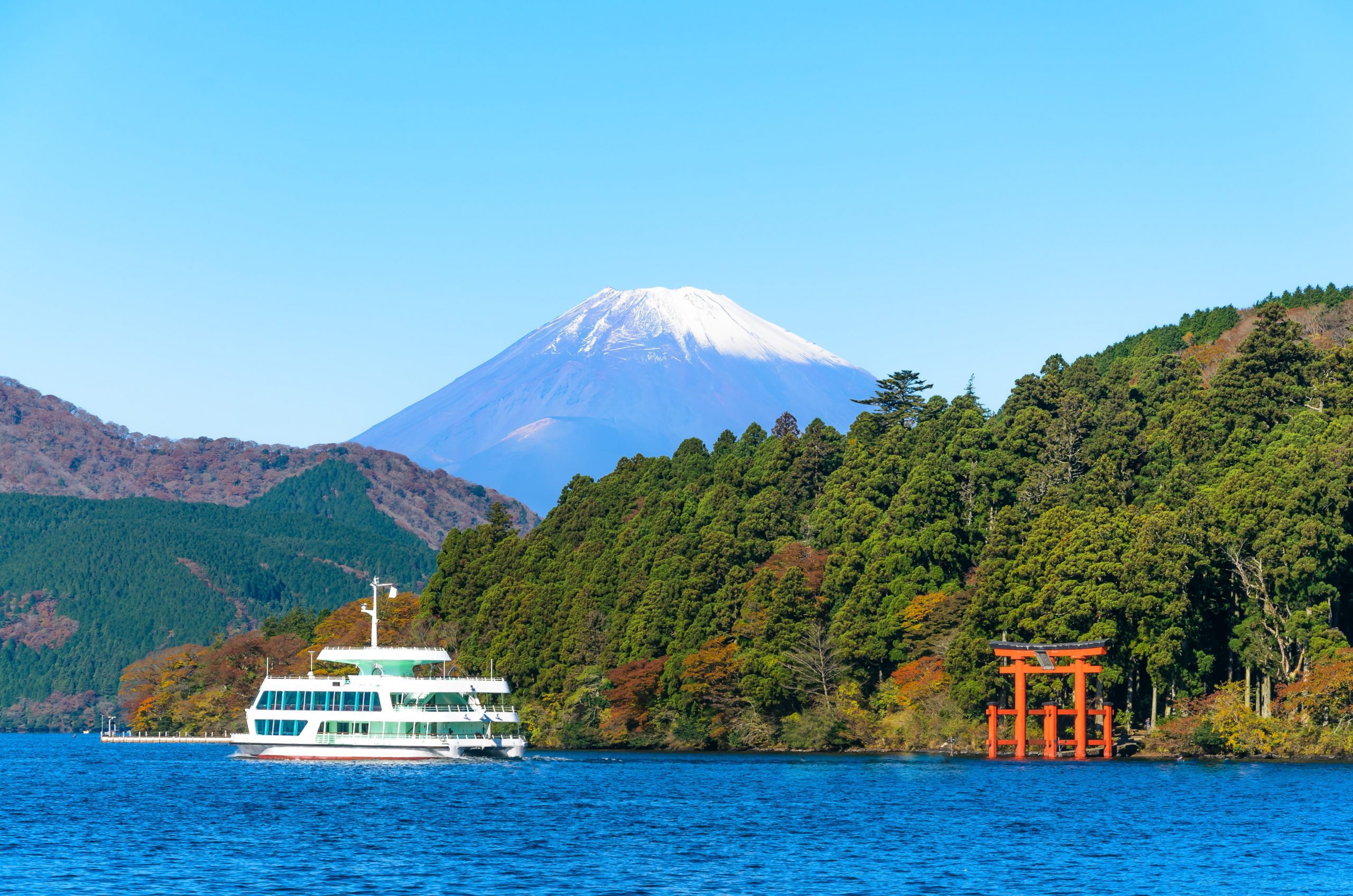
Lake Ashi and Mount Fuji from Hakone.
Pair the view with a ryokan and private or outdoor onsen, and Hakone makes a particularly easy one-night pause between Tokyo and Kyoto.
Kyoto: for temples without spring crowds
Kyoto in January feels very different from Kyoto in cherry blossom or autumn foliage season. You still need to get up early for the city’s best-known sights, but the pressure is lower. Cold dawns at Kiyomizu-dera or Fushimi Inari can be wonderfully quiet once the New Year rush has passed.

Snow in central Kyoto is occasional rather than constant, which is part of why a snowy Kinkaku-ji feels so memorable when your timing works out.
Osaka: for eating your way through winter
Osaka belongs on a January itinerary even without snow. Winter suits the city’s food culture. Crab, hot pot, warming bowls of udon and a restaurant on every basement floor make bad weather easy to work around.
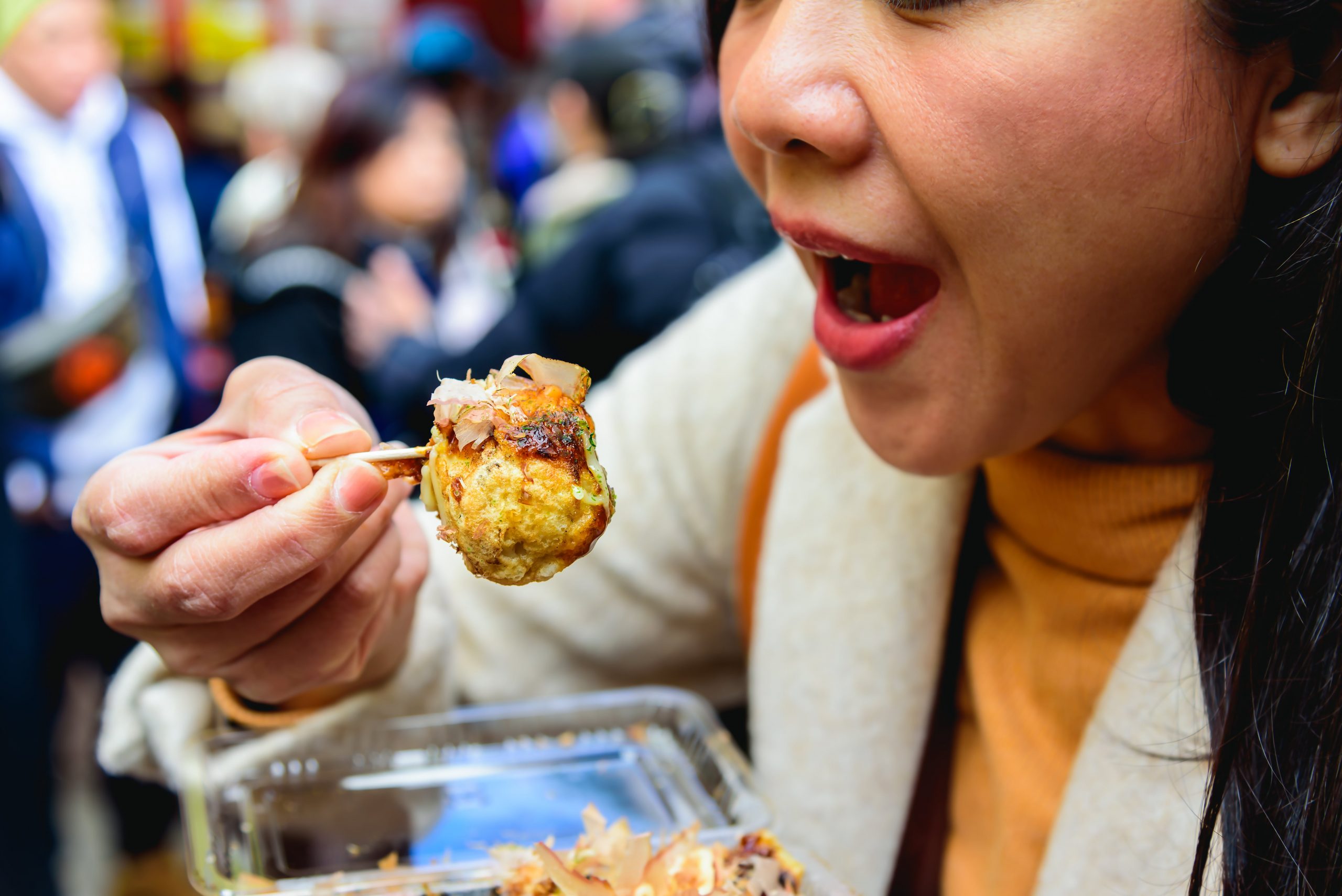
Famous takoyaki in Dotonbori, Osaka, Japan.
It’s also a useful base for Nara and Kyoto if you prefer coming back at night to a city with a little more energy.
Tokyo in January
Tokyo is one of the easiest places to be in winter. The air is often dry, public transport keeps you out of the cold for much of the day, and there is no shortage of indoor alternatives when you’ve had enough walking.

The air is often dry in January in Tokyo.
The standout seasonal experience in 2027 is sumo. The January tournament runs from 10-24 January at Ryōgoku Kokugikan.
Early January also brings department-store sales and fukubukuro, while some winter illuminations and seasonal ice rinks continue beyond Christmas.
For sightseeing, the city becomes markedly easier after the New Year holiday. That’s when January starts delivering what many visitors hope for: blue skies, tolerable crowds and long views from Tokyo’s observation decks.
Okinawa: for people who don’t actually want winter
Not everyone searching for Japan in January wants snow. In Naha, normal January highs are close to 20°C. This isn’t tropical beach weather in the mid-summer sense, but it’s dramatically warmer than Tokyo and Hokkaido.
Okinawa is the escape hatch we’d suggest to travellers who want Japanese culture, food and landscapes but know that ten days of winter coats will wear them down.
Onsen: January may be the best month for it
January is when an onsen stop stops feeling like an optional cultural experience and becomes one of the best parts of the itinerary. Kinosaki is particularly approachable for first-time visitors because the town is built around bath-hopping. Put on your yukata, walk between the public baths and accept that you’re not going to be sightseeing at full speed that evening.

An outdoor bath makes sense all year. A rotenburo surrounded by snow is another experience entirely. That contrast between freezing air and hot mineral water is why we would deliberately include an onsen night on a January trip rather than leave it as an optional extra.
Kusatsu Onsen in Gunma is one of Japan’s best-known hot spring towns, centred on its steaming “yubatake” (hot water field).

The water is highly acidic and rich in minerals, known for its therapeutic properties.
Ginzan Onsen in Yamagata is smaller and more visually dramatic, particularly when snow settles around its historic ryokan. It is also difficult to book, so don’t build an itinerary that depends on finding a room at the last minute.

The town has a magical and nostalgic atmosphere, especially when illuminated at night.
A few etiquette basics make the experience much less intimidating:
- Wash thoroughly before entering the bath.
- Don’t wear a swimsuit unless the property specifically says otherwise.
- Keep the small towel out of the bath water.
- Tattoo policies differ widely. Check directly with the property before booking rather than assuming you’ll be refused.
- A private bath or room with its own onsen is the easiest solution if you want more privacy.
January weekends are popular at well-known ryokan, especially in snow destinations. Book the accommodation before you lock in every rail connection around it.
What to eat in January
Winter is one of our favourite times to eat because so much of the Japanese food makes more sense once you’re cold.
Nabe is the obvious starting point. The category covers numerous styles of communal hot pot, from delicate broth-based versions to rich miso flavours. Around Ryōgoku, try chanko nabe, the filling hot pot associated with sumo wrestlers.

The broth can vary greatly, from simple dashi to more complex flavors with soy sauce, miso, or other seasonings.
Oden is simpler. Daikon, eggs, tofu and other ingredients simmer slowly in broth, and you’ll find it everywhere from specialist shops to convenience stores.

January is also a good time for kani, or crab. Hokkaido is famous for it, while the San’in coast along the Sea of Japan has its own strong winter crab culture.
Fugu is another winter speciality. If you’re curious, eat it at a licensed specialist restaurant rather than choosing somewhere at random.
At shrines during the New Year period, look for hot amazake, the gently sweet fermented-rice drink that is especially comforting on a cold morning.
And one January surprise is strawberries. Japan’s greenhouse strawberry season gets going in winter, so fruit shops and dessert counters begin filling with elaborate strawberry sweets well before spring.
A 10-day Japan in January itinerary
For a first trip, this is the sequence we would use:
Days 1-3: Tokyo
Settle in, explore the city, and between 10-24 January 2027, reserve a day or afternoon for the Grand Sumo tournament.
Day 4: Hakone or Nagano
Choose Hakone for an easy ryokan-and-Fuji overnight, or Nagano if snow monkeys and a more wintry landscape matter more.
Days 5-7: Kyoto
Give yourself two full sightseeing days. Start temples early and leave room for a slower afternoon if the cold catches up with you.
Day 8: Nara or Osaka
Visit Nara as a day trip, especially if your dates overlap with Wakakusa Yamayaki, or head straight to Osaka and add an extra evening there.
Days 9-10: Osaka
Finish with food, neighbourhood wandering and easy indoor options before departure.
Want more snow?
Replace Osaka with Hokkaido and fly from Kansai or Tokyo. Ideally, give Hokkaido at least three nights rather than flying north for a single rushed day.
We generally wouldn’t put Hokkaido first immediately after a long international flight unless skiing is the main purpose of the journey. Winter disruptions are easier to absorb once you’ve recovered from the flight and found your rhythm.
And if you’re travelling over New Year, start in the major cities. Rural transport, limited restaurant choices and holiday closures make countryside planning more fragile from roughly 29 December through the first days of January.
If you’d rather not juggle train reservations, ryokan availability and winter-weather contingencies yourself, you can design your Japan trip with a local designer and build the route around the experiences that matter most to you.
Practical tips for travelling to Japan in January
Pack layers, not one enormous coat
Japan’s indoor heating can be intense. You may go from near-freezing streets to a train carriage, department store or restaurant that feels almost too warm.
Thermal base layers, a warm mid-layer and an outer coat give you more flexibility. Add gloves, a scarf and waterproof footwear if you’re heading north or into the mountains.
Small disposable or reusable hand warmers called kairo are widely sold in convenience stores, pharmacies and supermarkets. They’re cheap enough that we wouldn’t devote suitcase space to bringing a month’s supply from home.
Rent specialist ski equipment locally
If skiing is only one part of a broader Japan itinerary, hiring skis, snowboards and bulky specialist equipment is often more practical than carrying everything between Tokyo, Kyoto and Hokkaido.
Don’t automatically buy the nationwide Japan Rail Pass
The nationwide JR Pass became substantially more expensive in 2023, so the old rule that it is automatically good value for a Tokyo-Kyoto round trip no longer holds.
Price your actual journeys first. Depending on your route, individual Shinkansen tickets or a regional rail pass can make more sense. This is especially true when part of your itinerary involves domestic flights, buses or private railway companies that aren’t covered by the national pass.
Leave some slack in snow country
Japan’s railway system is impressively reliable, but snow is still snow. Services in northern Japan and mountain regions can be delayed or altered during severe weather. If you have an international flight the next morning, don’t plan to arrive in Tokyo from a remote snow destination at midnight with no margin for disruption.
Winter road conditions deserve even more caution. If you’re self-driving, check winter tyre requirements and mountain-pass closures rather than assuming Google Maps’ fastest route is usable.
Carry some cash outside the major cities
Card acceptance has improved enormously, but small restaurants, local buses, bathhouses and rural businesses can still be easier with cash. This matters more in an onsen village than it does in Shibuya.
What January is not good for?
January is worth visiting, but it isn’t the answer to every Japan trip.
First, there are no mainstream cherry blossoms in Tokyo or Kyoto. If seeing sakura is non-negotiable, travel later.
Second, the Sapporo Snow Festival is in February, not January. January is excellent for Hokkaido snow, but not for that particular event.
Third, daylight is short, especially in northern Japan. You need to start sightseeing earlier than you might in April or October.
Some high-altitude hiking trails, alpine roads, and seasonal attractions are also completely closed in winter. And if you actively dislike cold weather, heavy clothing or the possibility of snow disrupting a day, January probably isn’t the month we’d choose simply because it offers smaller crowds.
In that case, March can give you early spring conditions, while November combines relatively comfortable sightseeing weather with autumn colour in much of the country. So, is it worth visiting Japan in January? Yes, if you want winter as part of the experience rather than something you’re hoping to avoid.
Japan in January FAQs
Is January a good time to visit Japan?
Yes. January is a good time to visit Japan for skiing, snow scenery, onsen, clear winter skies and generally lighter sightseeing crowds after the New Year holiday. The main drawbacks are cold weather, short daylight hours and closures around 1-3 January.
What is Japan like in January?
Japan in January ranges from deep snow and sub-zero temperatures in Hokkaido to cool, sunny winter weather in Tokyo and mild conditions in Okinawa. After the busy New Year period, cities such as Tokyo and Kyoto are generally quieter than during spring or autumn peak seasons.
Is Japan busy in January?
Japan is very busy around New Year, particularly at major shrines, transport hubs and popular holiday destinations. Crowds generally fall once the New Year period ends. From the second week of January, many city attractions are significantly calmer, although ski resorts can remain busy, especially on weekends.
What should I pack for Japan in January?
Pack thermal layers, a warm coat, gloves and comfortable shoes. Waterproof footwear with good grip is important for Hokkaido, ski resorts and snowy mountain towns. For Tokyo, Kyoto and Osaka, layers are useful because trains, shops and restaurants are often much warmer than the streets outside.
Can you ski in Japan in January?
Yes. January is one of the best months for skiing in Japan. Hokkaido resorts such as Niseko are known for powder snow, while Nagano, Niigata and Tohoku also offer excellent skiing. Popular resorts and accommodation can be booked well ahead, particularly for weekends.
Is January the right month for your Japan trip?
January works best when you lean into the season.
Build in an onsen night. Eat the food that makes sense when it’s in the colder months. Go north if you want serious snow, or stay on the Pacific side if clear winter sightseeing days matter more. And don’t waste the first week fighting New Year closures when you could make the celebrations part of the experience instead.
Get the route right, and January gives you what spring and autumn can’t: deep snow in the mountains, clear air over Mount Fuji, steaming baths on freezing evenings and major temples after the peak-season crowds have gone home.
That’s more than a compromise for travelling in winter. For the right traveller, it’s the reason to go.
Visit Japan in the other months? Explore our Japan travel guide for an unforgettable journey.
- Japan in February
- Japan in March
- Japan in April
- Japan in May
- Japan in June
- Japan in July
- Japan in August
- Japan in September
- Japan in October
- Japan in November
- Japan in December